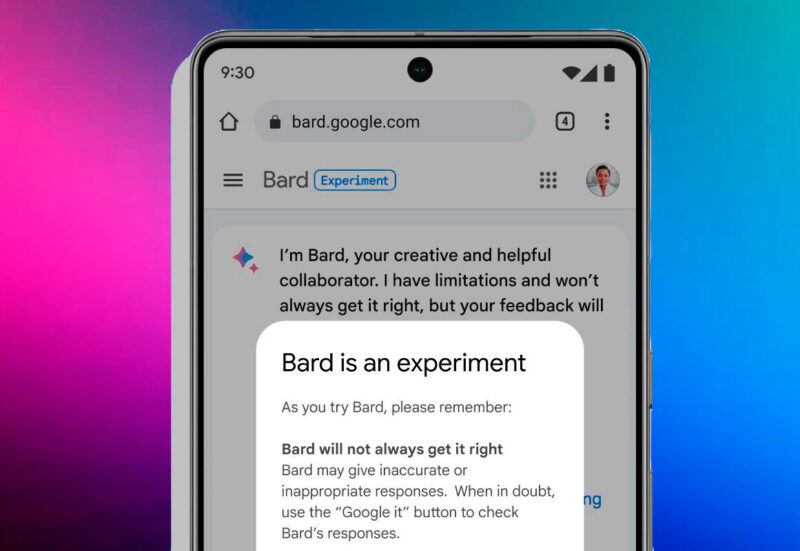
Google’s employees tested Bard, a direct competitor to OpenAI’s ChatGPT, which was launched unexpectedly in November 2022. The release of ChatGPT shook the tech industry, presenting a substantial threat to Google’s dominance in the search market. To counter this challenge, Google released its own version of the chatbot, Bard, which is connected to Bing Chat. However, many employees of Google believe that the launch was too hasty, with considered feedback that the chatbot is «worse than useless» and «a pathological liar.»
Despite negative feedback from employees, the company continued with its plan to launch Bard. The tension and discontent among certain employees at Google increased after a series of decisions made by management following the launch of ChatGPT. For years, Google had been working to strengthen its AI ethics team to develop products and services in line with the company’s principles, with high security standards. However, after OpenAI’s move, development was accelerated, leaving many ethical questions on the backburner.
Although Google is not inexperienced in the field of AI, many of its ambitious projects were limited to coexisting within the laboratory. In 2022, the pace of development accelerated, leaving certain ethical issues overlooked. The dynamics of Google’s work dictate that a product must achieve a high score in certain categories before it reaches the market. However, in the case of Bard, this changed. For example, «child safety» still needs to reach a score of 100, but «equity» can be granted for a launch with 80 or 85 points.
Despite negative feedback from its employees, Google’s CEO remains optimistic about the possibilities that Bard could bring. He acknowledged that all models have problems with hallucinations and insists on prioritizing security. However, with reports of discontent among some employees, the launch of Bard may face challenges in winning over customers.